What is the Difference Between a Smoke Alarm and a Commercial Fire Alarm System?
Walk into almost any business in Northeastern Pennsylvania and you will see something on the ceiling. It might be a white disc about the size of your palm with a small blinking light. You probably assume that device is doing the job of protecting your building from fire. In many cases what you are looking at is a residential smoke alarm. And in a commercial building that is a serious problem. The terms smoke alarm and fire alarm system get used interchangeably all the time. They are not the same thing. And if you own or operate a business in Scranton, Wilkes-Barre, Throop, or the surrounding NEPA region.
What a Smoke Alarm Actually Is
A smoke alarm is a self-contained standalone device. It detects smoke in the immediate area where it is installed, makes noise, and stops when the smoke clears. That is the complete list of what it does.
It does not communicate with any other device in your building. It does not notify the fire department. It does not tell anyone outside the building that there is a problem. It does not trigger sprinklers, close fire doors, or shut down your HVAC system to stop smoke from spreading.
Smoke alarms are designed for homes where a small number of occupants can hear a single device from anywhere in the space. In a commercial building that design falls dramatically short of what is needed and what Pennsylvania law requires.
What a Commercial Fire Alarm System Actually Is
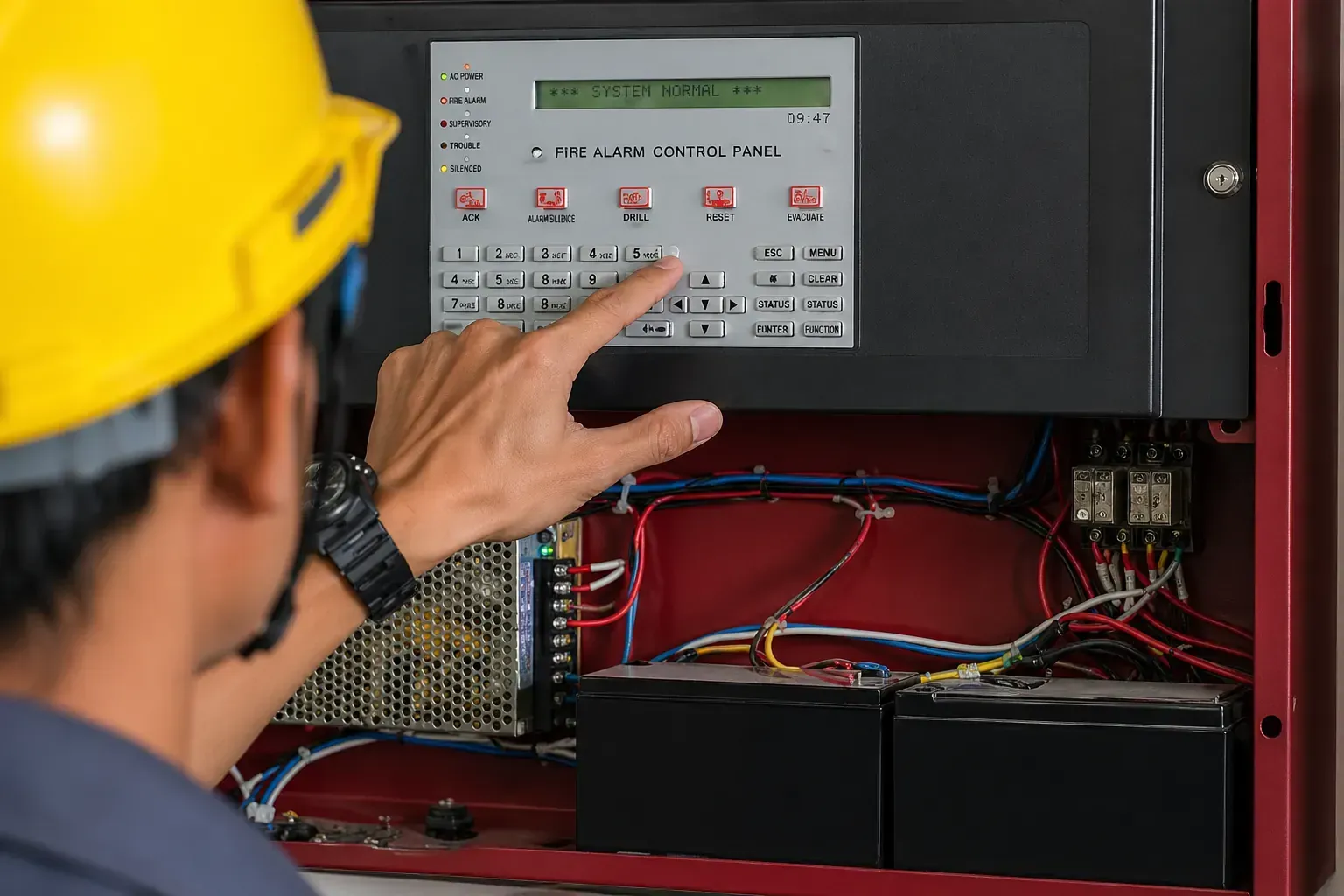
A commercial fire alarm system is a fully interconnected life safety network. Every component communicates through a central Fire Alarm Control Panel that serves as the brain of the entire operation.
Here is what a properly designed system in your NEPA business building includes:
Fire Alarm Control Panel
The central hub that monitors every connected device throughout your building. When any device triggers an alarm the panel identifies the exact location, activates notification devices throughout the building, and transmits the signal to a 24 hour monitoring station that immediately contacts emergency services.
Smoke Detectors Connected to the System
Unlike standalone alarms, these smoke detectors connect directly to the control panel. When one detector triggers, all notification devices throughout your entire building activate simultaneously, ensuring every person in every area receives the alarm at the same time.
Heat Detectors
Used in kitchens, loading docks, and manufacturing areas where smoke from normal operations would trigger false alarms. They activate based on temperature rather than smoke.
Manual Pull Stations
Wall mounted devices that allow anyone in your building to trigger the full system immediately. Where smoke may take several minutes to reach a detector a person on site can activate a pull station within seconds.
Notification Appliances
Audible horns and visual strobe lights throughout every area of your building. Strobes are required because audible alarms alone are insufficient for hearing impaired occupants or areas with high ambient noise.
24 Hour Monitoring
Under NFPA 72 your alarm signal must reach a monitoring station within 90 seconds of activation and that station must immediately notify the fire department. A standalone smoke alarm has no monitoring capability whatsoever.
Is your NEPA commercial building actually protected? Call Bee-lectric at (570) 325-5808 to schedule a commercial electrical assessment today.
What Pennsylvania Code Requires for Your Building
Pennsylvania follows NFPA 72, the National Fire Alarm and Signalling Code, as the standard for commercial fire alarm installation, testing, inspection, and maintenance.
Your commercial building requires a monitored fire alarm system if it has three or more stories or 100 or more occupants above the main exit floor. Assembly, healthcare, and educational occupancies face even stricter requirements under NFPA 101. All systems when installed or updated must be monitored so alarm signals reach emergency services automatically. Annual inspections by certified professionals are required and you must maintain documentation.
The critical word is monitored. A central station cannot monitor a residential smoke alarm. No matter how many smoke alarms you install, your building is not compliant if there is no monitored fire alarm control panel connecting those devices to emergency services.
The consequences of non-compliance are direct. Your insurance policy can deny fire damage claims if your building lacked a compliant system. Inspections can result in fines and required remediation before operations can continue. And in the event of an injury or fatality, the absence of a compliant system creates serious legal liability for you as the property owner.
The Specific Risks You Face Right Now
After hours fires go unreported
If your business is closed when a fire starts your smoke alarm sounds in an empty building. Nobody calls the fire department. A monitored commercial system contacts emergency services automatically regardless of whether anyone is present.
No location information for firefighters
Your standalone smoke alarms provide no location data. A modern addressable system tells the fire department exactly where in your building the alarm originated before they walk through the door.
Your insurance coverage is at risk
If a claim investigation reveals only residential smoke alarms were present your insurer may deny the claim. For a commercial property in NEPA that could mean hundreds of thousands of dollars in uninsured losses.
Your employees and customers are not fully protected
A smoke alarm in one corner of your building may not be audible in every area. A commercial system with notification appliances throughout every zone ensures everyone receives the alarm at the same time.
How to Know Which System You Actually Have
A standalone smoke alarm is a self-contained disc shaped device on the ceiling with a test button. It operates completely independently with no connection to other devices or a central panel.
A commercial fire alarm system has a Fire Alarm Control Panel mounted in a mechanical room, hallway, or near the main entrance. It is a box with a display screen and status indicators. Multiple devices throughout your building connect back to this panel. The system also has monitoring signage showing the monitoring company and contact information.
If you cannot identify a Fire Alarm Control Panel in your building you almost certainly do not have a compliant system regardless of how many ceiling mounted devices are present.
What You Should Do Next
Gather the following before calling us: the age and type of your current fire detection devices; whether a control panel is present and when it was last inspected; whether your system is connected to 24-hour monitoring; any documentation from previous inspections; and your insurance policy requirements for fire detection.
When we assess your building, we look at the complete electrical picture, including the control panel, device placement, wiring, power supply, notification coverage, and monitoring connection to ensure your building meets current Pennsylvania requirements.
Your Business Deserves Protection That Actually Works
A smoke alarm on the ceiling gives you the feeling of protection without delivering the reality of it. That gap has consequences for the safety of everyone in your building, your legal compliance, and your insurance coverage.
Call Bee-lectric at (570) 325-5808 to schedule your commercial fire alarm assessment in Northeastern Pennsylvania. Be Safe. Be Sure.