Electrical Safety Guide for Aluminum Wiring in Properties and Businesses
If your property or commercial building in Northeastern Pennsylvania was constructed between the mid-1960s and the mid-1970s there is a real possibility that aluminum wiring runs through your walls right now. Most property owners who have it do not know it is there. Many who do know assume it is fine because the building passed inspection decades ago and nothing has gone wrong yet.
Concerns were raised in the mid-1970s that structures wired with aluminum wire manufactured prior to 1972 had a significantly increased risk of fire from faulty electrical connections over structures that were wired with post-1972 wire or copper wire. Understanding what aluminum wiring actually does over time, what the warning signs look like in your property, and what your options are as a property or business owner in NEPA is the first step toward making an informed decision about the electrical system your building depends on every day.
What Aluminum Wiring Is and How It Ended Up in So Many NEPA Buildings
Aluminum has been recognized as an electrical conductor. Most large-diameter transmission and distribution cables, service entrance cables and feeder cables are made from aluminum due to the conductivity-to-weight ratio advantage of aluminum over copper. In the mid-1960s contractors began to use small diameter solid core aluminum wire for 15 to 20 ampere branch wiring circuits in residential commercial and industrial properties instead of copper wire.
The reason was economics. Copper prices rose significantly during that period and aluminum offered a cheaper alternative that appeared to do the same job. Between 1965 and 1971 an estimated 1.5 to 2 million single-family homes, mobile homes and multiple-family dwellings were completely wired with aluminum along with an unknown additional number of properties that were partially wired with aluminum wire.
Why Aluminum Wiring Creates Fire Risk Over Time
The fire risk from aluminum wiring does not come from the wire itself running through the walls. It comes from what happens at every point where that wire connects to an outlet, switch, breaker, or fixture over time.
Expansion and contraction at connection points
Aluminum expands and contracts significantly more than copper when it heats and cools. This expansion and contraction can lead to loose connections at terminals and switches which are common points of failure in electrical systems. Loose connections increase the risk of overheating and fire.
Every time current flows through your wiring the wire heats slightly and expands. When the load drops the wire cools and contracts. That cycle happens thousands of times over the life of the wiring. At connection points where the wire is held by a screw terminal, repeated movement gradually loosens the connection. A loose connection creates resistance.
Oxidation at connection points
Aluminum wiring is more prone to oxidation than copper. When aluminum wires oxidize they form a layer of aluminum oxide which can impede the flow of electricity. This resistance causes the wire to overheat posing a significant fire risk.
Aluminum oxide is an insulating material. As it builds up at connection points it increases resistance in the circuit. Higher resistance means more heat generated at that point during normal operation. In older NEPA commercial buildings and properties where aluminum wiring has been in place for fifty years the oxidation at connection points is not theoretical.
Galvanic corrosion when connected to copper or brass
When aluminum wiring is connected to copper or brass a chemical reaction called galvanic corrosion can occur. This reaction further degrades the wiring increasing the risk of failure and fire hazards.
This is a particularly relevant risk in NEPA buildings that have had any electrical work done over the decades since original construction. When a contractor adds outlets, replaces switches, or updates fixtures without accounting for the aluminum wiring in the building they may create direct aluminum to copper connections that accelerate corrosion at those points.
The fire hazard statistics
According to the Consumer Product Safety Commission homes with aluminum wiring are 55 times more likely to have at least one outlet connection reach fire hazard conditions such as hot receptacles electrical sparks and charred materials.
That statistic is not about aluminum wiring that was poorly installed. It applies to aluminum branch circuit wiring generally because the physical properties of the material create the conditions described above regardless of installation quality.
Call Bee-lectric at (570) 325-5808 to schedule an aluminum wiring assessment for your NEPA property today.
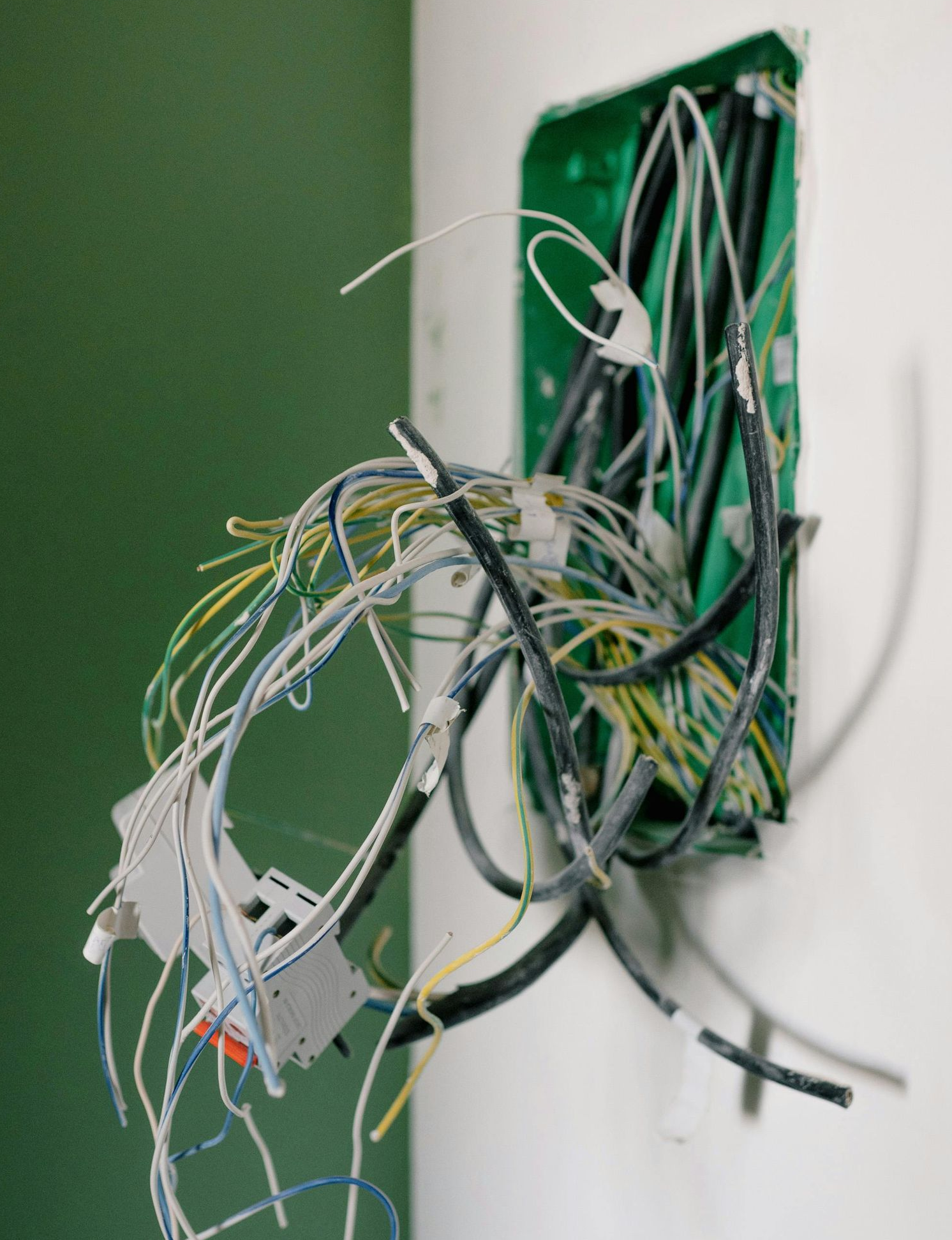
Warning Signs That Aluminum Wiring Is Creating Problems in Your Building Right Now
These warning signs apply to both residential properties and commercial buildings in Northeastern Pennsylvania. None of them should be dismissed or attributed to other causes without having the electrical system professionally evaluated.
Outlets or switch plates that feel warm or hot to the touch are one of the most reliable early warning signs that a connection point in the wiring behind that device is generating heat from resistance or a loose connection.
A burning plastic smell near outlets switches or electrical panels that cannot be traced to an obvious source is a serious warning sign that wiring insulation is overheating at a connection point nearby. This is an emergency that requires immediate professional attention.
Lights that flicker or dim without an obvious explanation indicate that a connection somewhere in that circuit is intermittently failing. In aluminum-wired buildings, intermittent failure is typically a loose or oxidized connection point.
What Pennsylvania Code Says About Aluminum Wiring
It is important to understand what Pennsylvania code actually requires and what it does not require regarding existing aluminum wiring in properties and commercial buildings.
The use of single-strand aluminum wiring is strictly prohibited for all residential housing due to alarming statistics, numerous home fire implications and safety concerns. Southwestern Pennsylvania building codes restrict single-strand aluminum wired circuits that supply electricity throughout the home.
For existing buildings with aluminum branch circuit wiring already in place Pennsylvania does not require immediate full replacement simply because the wiring exists. However any updates, modifications or additions to the electrical system in a building with aluminum wiring must be done in a way that accounts for the aluminum and uses properly rated components and transition devices.
A building can have aluminum wiring and be up to code but that does not eliminate the safety and fire risks associated with the wiring which is why it may affect the insurability of a building from an insurance perspective.
Your Options as a NEPA Property or Business Owner
If you have confirmed or suspect that your property or commercial building in Northeastern Pennsylvania has aluminum branch circuit wiring you have several options depending on the scope of the situation and your goals for the building.
Full rewiring with copper
The most comprehensive solution is replacing the aluminum branch circuit wiring throughout the building with copper. This eliminates the fire risk at its source and removes the insurance complications associated with aluminum wiring.
COPALUM crimping
The Consumer Product Safety Commission recognizes COPALUM crimping as an acceptable method for addressing aluminum wiring connections. This process involves attaching a short copper pigtail to the end of each aluminum wire using a special crimp connector that creates a permanent gas-tight connection between the aluminum and the copper.
AlumiConn connectors
AlumiConn connectors are another CPSC recognized option for addressing aluminum to copper connections at outlet and switch locations. They create a separate compartment for the aluminum and copper conductors with an anti-oxidant compound that prevents the galvanic corrosion that occurs when the two metals contact directly.
AL-rated devices throughout
Every outlet switch and fixture in a building with aluminum wiring must be rated for use with aluminum conductors. Devices marked CO-ALR are rated for aluminum wiring connections. Devices marked only CU or copper are not appropriate for direct connection to aluminum wiring and create exactly the type of problematic connection that generates heat over time.
Protect Your Property and Everyone in It
Aluminum wiring in a NEPA property or commercial building is not an immediate emergency in every case. But it is a condition that requires professional evaluation, ongoing monitoring, and properly rated components throughout the system.
We serve properties and commercial buildings across Scranton, Wilkes-Barre, Throop, Dunmore, Archbald, Moosic, Olyphant, and the surrounding Northeastern Pennsylvania region. When we evaluate a building with aluminum wiring we look at every connection point in the system because that is where the risk actually lives and that is where the solution has to start.
Call Bee-lectric at (570) 325-5808 to schedule your aluminum wiring assessment in Northeastern Pennsylvania today.