What Every Business Owner in Northeastern Pennsylvania Needs to Know About Commercial Electrical Wiring
Running a business in Northeastern Pennsylvania comes with a long list of responsibilities. Your electrical system is probably not at the top of that list until something goes wrong. A tripped breaker during a busy shift. An inspection that flags outdated wiring before a renovation. An overloaded panel that shuts down operations at the worst possible time. By then the cost is always far greater than it needed to be.
Commercial buildings across Scranton, Wilkes-Barre, Throop, and the surrounding NEPA region run on electrical systems that were often installed decades ago. As businesses grow, add equipment, and expand operations, the wiring underneath it all quietly struggles to keep up.
What Commercial Electrical Wiring Actually Means for Your Building
Commercial electrical wiring is the complete system that powers everything inside your building. That includes your lighting, HVAC equipment, outlets, data systems, machinery, and any other electrical load your business depends on every single day.
The key components of a commercial electrical system include:
- The main electrical panel and any subpanels that distribute power throughout the building
- Circuits designed for specific equipment and load types
- Conduit systems that protect and route the wiring throughout the structure
- Outlets, switches, and fixtures connected to those circuits
- Grounding and bonding systems that protect people and equipment from electrical faults
Every one of these components has to work together correctly. When one part of the system is undersized, outdated, or improperly installed, the entire system is affected.
In our experience working on commercial properties across Northeastern Pennsylvania, one of the most common issues we find is wiring that was installed for the demands of a much smaller or less equipment heavy operation. The building grew. The wiring never did.
How Commercial Electrical Wiring Differs From Residential and Why It Matters
This is one of the most important things a business owner can understand before hiring any electrician for their property. Commercial electrical wiring is fundamentally different from residential wiring in three major ways.
First is voltage and power supply. Most homes in Pennsylvania run on single phase power at 120 or 240 volts. Commercial buildings typically use three phase power at 277 or 480 volts. Three phase power allows a building to run heavy equipment, large HVAC systems, and industrial machinery more efficiently and at a much greater scale than a home system ever could.
Second is physical protection. Residential wiring is commonly run through plastic sheathed cable inside walls, while commercial systems, especially during an electrical panel upgrade, require metal conduit systems that physically protect the wiring from damage, heat, moisture, and the kind of wear that comes with high traffic industrial environments. This is not optional in commercial construction. It is a code requirement.
Third is load demand. A commercial building with offices, computers, lighting systems, climate control, and kitchen or manufacturing equipment draws far more power simultaneously than any home. The entire system has to be designed and sized for that reality from the start.
This is why hiring a residential electrician for commercial work creates real problems. The knowledge, licensing, and approach required for commercial work is different. A contractor who primarily works on homes is not the right person to assess, install, or repair a commercial electrical system.
Not sure if your building is wired for its current demands? Call Bee-lectric at (570) 325-5808 to schedule a commercial electrical assessment.
The Most Common Types of Commercial Electrical Wiring Used in Pennsylvania Buildings
Commercial buildings do not all use the same wiring methods. The right approach depends on the type of building, the electrical loads it needs to support, and the environment the wiring will be installed in.
The most common types used in commercial construction across Pennsylvania include:
- Electrical raceways and conduit systems are the most widely used method in commercial buildings. Wiring runs through metal conduit that protects it from physical damage and allows for future modifications without tearing open walls.
- Metal clad cable assemblies combine multiple conductors inside a protective metal sheath. These are commonly used for branch circuits, lighting systems, and equipment connections inside commercial buildings.
- Busways are enclosed conductor systems used in high amperage environments like warehouses, data centers, manufacturing facilities, and large commercial buildings.
For most commercial properties we work on in Northeastern Pennsylvania, EMT conduit is the standard wiring method. It is durable, code compliant, and easier to modify when a business needs to expand or reconfigure its electrical system down the road.
Pennsylvania Commercial Electrical Code and What It Requires From Your Building
Pennsylvania follows the National Electrical Code, also known as NEC or NFPA 70, for all commercial electrical installations. This code sets the minimum safety standards for how electrical systems must be designed, installed, and maintained.
For commercial buildings specifically, the NEC requirements are stricter than for residential properties. Here is what matters most for business owners in NEPA:
- Commercial electrical systems require higher voltage services and more complex load calculations than residential systems
- Electrical panels must be easily accessible with a minimum of three feet of clear space around them at all times
- All circuit breakers inside the panel must be clearly labeled to identify which part of the building they serve
- Dedicated circuits are required for high demand equipment including HVAC systems, commercial kitchen equipment, and industrial machinery
- Any updates, changes, or additions to a commercial electrical panel must meet current NEC standards regardless of when the original system was installed
- Commercial buildings are subject to stricter inspection requirements than residential properties especially in high occupancy environments
One thing many business owners do not realize is that code compliance is not just about passing an inspection. An electrical system that does not meet current standards creates real liability for your business if an incident occurs and your system is found to be non compliant.
Most electrical problems in commercial buildings do not appear suddenly. They develop slowly over time and give off warning signs that are easy to overlook when you are focused on running a business.
Here are the warning signs every NEPA business owner should take seriously:
- Circuit breakers that trip frequently are not just an inconvenience. They are a sign that your system is being asked to carry more load than it was designed for. Repeated tripping without an obvious cause means the system needs to be evaluated.
- Flickering or dimming lights especially when equipment starts up or under heavy use often indicate that the wiring cannot handle the current demand being placed on it.
- A burning smell coming from panels, outlets, or switches is an emergency. This means wiring or components are overheating. This requires immediate attention from a licensed commercial electrician.
- Outlets or switch plates that feel warm to the touch signal dangerous wiring conditions. Normal electrical components should not generate noticeable heat.
- Visible corrosion, discoloration, or scorch marks around panels or outlets indicate that heat buildup has already been occurring. This is a serious safety risk.
In commercial properties we have inspected across the Scranton and Wilkes-Barre area, we have found panels operating well beyond their safe capacity that had not been professionally evaluated in many years. By the time visible warning signs appear, the situation is already serious.
What to Look for When Hiring a Commercial Electrician in Northeastern Pennsylvania
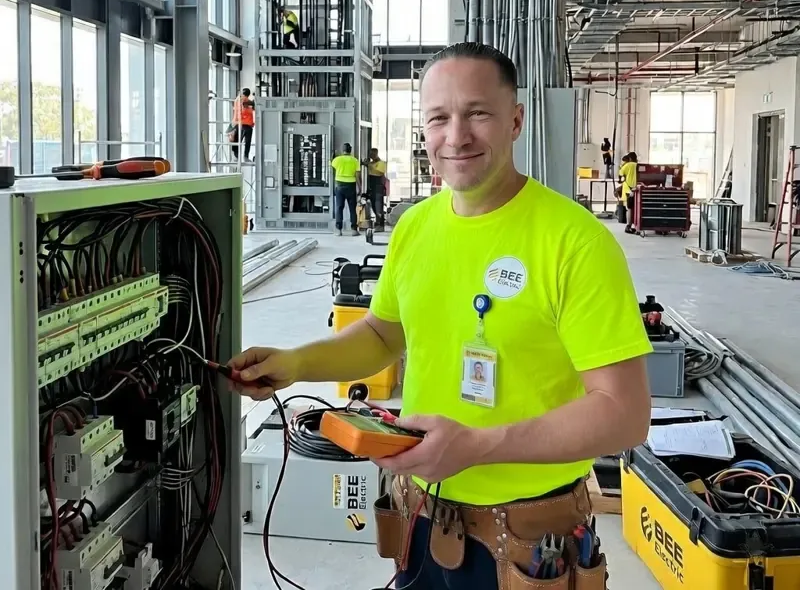
Not every electrician is qualified for commercial work. Here is what to check before hiring anyone to work on your commercial property:
- Confirm they hold a master electrician license that covers commercial electrical work in Pennsylvania
- Verify they carry comprehensive liability insurance and workers compensation coverage
- Ask specifically about their experience with commercial buildings not residential homes
- A qualified commercial electrician will always pull the proper permits and schedule the required inspections
- Look for a local contractor who knows the inspection requirements and authority having jurisdiction in your specific municipality in NEPA
Bee-lectric is a licensed commercial electrician serving businesses across Scranton, Wilkes-Barre, Throop, Dunmore, Archbald, and the surrounding Northeastern Pennsylvania region. Our team works exclusively on commercial and industrial properties.
Protect Your Business Before There Is a Problem
Your commercial electrical system is the backbone of everything your business does. When it works correctly you never think about it. When it does not the consequences are immediate and expensive.
Call Bee-lectric at (570) 325-5808 to schedule your commercial electrical inspection in Northeastern Pennsylvania. Be Safe. Be Sure.