Why Older NEPA Homes With Outdated Wiring Face a Higher Risk of Electrical Emergencies Every Single Season
Northeastern Pennsylvania has some of the most charming older homes in the entire region. The craftsman bungalows in Scranton. The century-old rowhouses in Wilkes-Barre. The Victorian-era properties throughout Dunmore, Archbald, and the surrounding communities. These homes were built with quality materials and genuine craftsmanship that modern construction rarely matches. But behind those beautiful plaster walls and original hardwood floors there is often an electrical system that was never designed to handle what your family asks of it every single day.
Old electrical wiring is a common concern in homes built before modern electrical codes and it can lead to inefficiencies, safety hazards and costly repairs if left unaddressed. In NEPA specifically the combination of an older housing stock and four distinct seasons that each place different demands on the electrical system creates a situation where the risk of an electrical emergency does not peak in one season and then ease off. It compounds year round.
Why NEPA Has a Higher Concentration of Outdated Wiring Than Most Areas
Understanding why outdated wiring is such a prevalent issue in Northeastern Pennsylvania starts with the age of the housing stock in this region.
Outdated wiring is one of the most common home inspection issues found in Northeast Pennsylvania, specifically knob-and-tube and aluminum wiring. Homes in Scranton, Wilkes-Barre, Throop, and the surrounding communities were built across multiple eras of electrical technology. Many properties predate modern wiring standards entirely. A home built in the 1920s or 1930s likely has knob-and-tube wiring, while a home built or renovated in the 1960s or 1970s likely has aluminum branch circuit wiring. These aging electrical systems can also impact commercial properties, making professional electrical sign repair and maintenance essential to ensure illuminated signs, exterior lighting, and electrical connections remain safe, reliable, and compliant with current standards.
Homes built before 1950 were typically wired for no more than 60 amps of service, a fraction of what modern households need. Many still contain knob-and-tube wiring, ungrounded outlets and electrical panels that were never designed to handle today's appliances. According to FEMA electrical malfunction is the fourth leading cause of house fires and older homes face an outsized share of that risk.
The Three Types of Outdated Wiring Most Commonly Found in NEPA Homes
Knob and Tube Wiring
Knob and tube wiring was the standard installation method in American homes from the 1880s through the 1940s. It uses ceramic knobs to hold wires away from framing and ceramic tubes to protect wires as they pass through wood. The design was intentional. Knob and tube wiring releases heat which can be a big hazard when it is in contact with flammable materials like insulation.
That design worked when it was installed because homes of that era used far less electricity than modern households and the wiring had open air around it to dissipate heat. Today two things have changed that make knob and tube wiring in a NEPA home a genuine risk.
Aluminum Wiring
Aluminum wiring was popular in the 1960s and 1970s and can become loose and oxidize over time leading to potential fire hazards.
Aluminum expands and contracts more than copper which can lead to loose connections and arcing which are miniature lightning strikes inside your walls that can easily start a fire.
For NEPA homes this seasonal expansion and contraction is particularly significant. Pennsylvania winters push indoor heating systems hard. Pennsylvania summers run AC systems continuously during heat waves. Every heating and cooling cycle causes the aluminum wiring to expand and contract at connection points throughout the home. Over decades of Pennsylvania seasons those connections loosen. Loose connections arc and arcing starts fires.
Cloth-Insulated Wiring
Cloth insulated wiring is often found in homes built before 1960 and is insulated with cloth which deteriorates and exposes wires over time.
In NEPA homes where cloth-insulated wiring runs through walls that have been exposed to the humidity fluctuations of Pennsylvania summers and the dry heated air of Pennsylvania winters the deterioration of that cloth insulation accelerates. As the insulation breaks down the bare copper conductors beneath it become exposed. Exposed conductors in contact with wall framing or other materials create exactly the arc fault conditions that cause electrical fires inside walls.
Call Bee-lectric at (570) 325-5808 to schedule a wiring assessment for your Northeastern Pennsylvania home today.
Why the Risk Is Higher Every Single Season in NEPA
This is the part that makes outdated wiring in a NEPA home distinctly more dangerous than the same wiring in a region with a milder climate. Every season places different stress on an already compromised electrical system.
Winter
Pennsylvania winters push heating systems to run continuously during cold stretches. Electric space heaters are common supplements in older NEPA homes. The combination of continuous HVAC operation and supplemental space heaters on circuits that were never designed to carry those loads creates persistent overloading. Overloaded circuits are the most common result of old wiring risks.
Spring
Spring in NEPA brings moisture. Rain, humidity, and the thawing of frost create elevated moisture conditions inside walls and crawl spaces. For cloth-insulated knob and tube wiring moisture accelerates insulation deterioration and increases the risk of ground faults at locations where moisture contacts degraded wiring. Spring is also when homeowners turn AC systems back on after months of disuse, placing a new load on circuits that have been operating exclusively on heating demands all winter.
Summer
Your home might have been built when the most high-tech appliance was a toaster but today it is powering high-definition TVs, air conditioners and electric vehicle chargers. Summer heat waves push AC systems to run continuously in NEPA homes. For older homes where the AC circuit was added to an existing outdated panel without proper sizing or dedicated circuit installation the continuous summer load on that panel is exactly the condition that creates overheating at wiring connection points.
Fall
Fall in NEPA brings both the resumption of heating system operation and increased use of high-draw appliances. Dryers, ovens, and electric cooking appliances run more as outdoor cooking and entertaining seasons end. Each appliance added to an already loaded circuit in an older NEPA home pushes the system further toward its limit during exactly the season when the first hard freeze will demand heating system operation on top of everything else.
Warning Signs Your NEPA Home's Wiring Is Already Struggling
These warning signs can be observed from the outside of the electrical system without opening any walls. Take every one of them seriously.
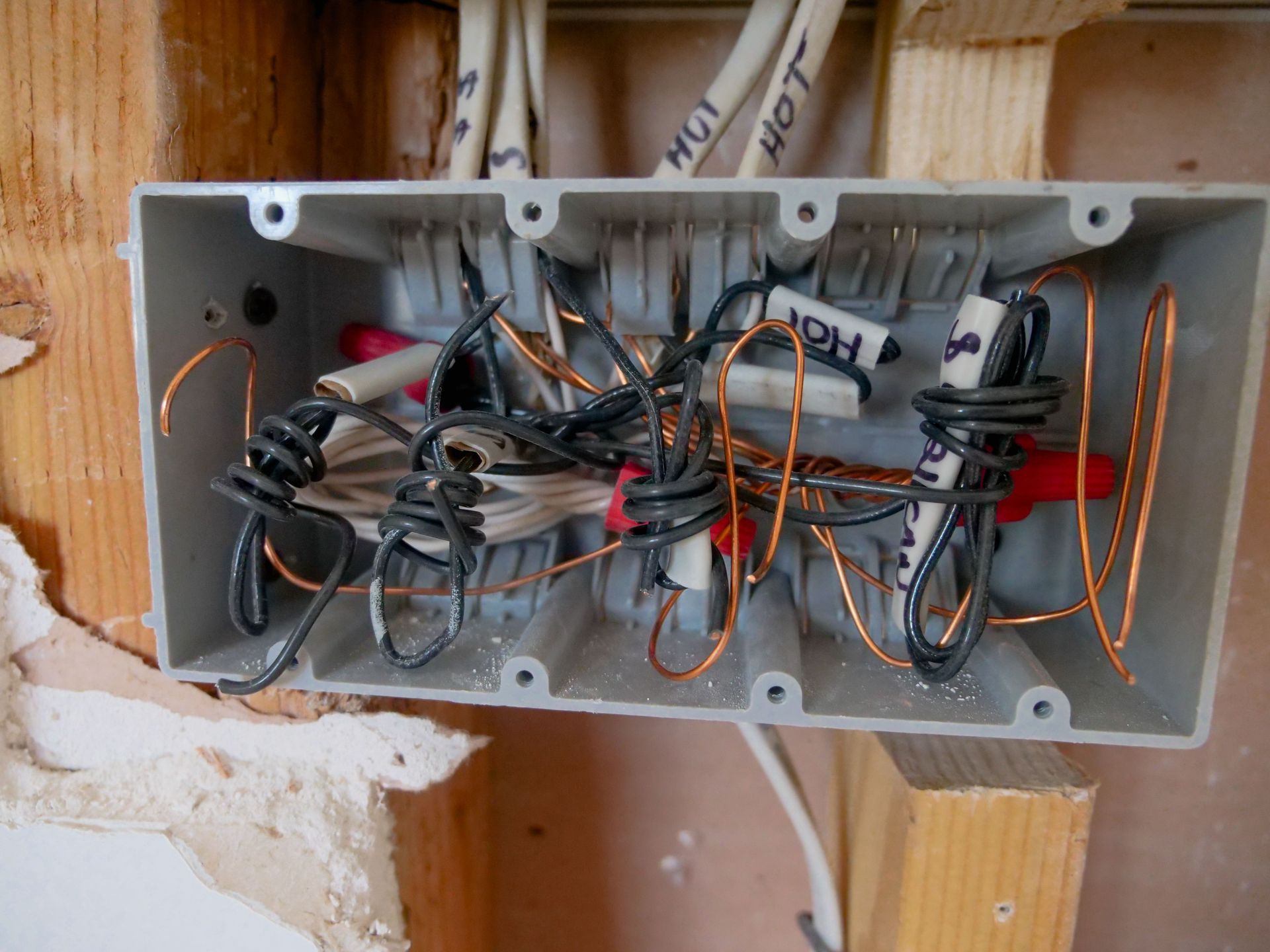
Common signs of old or faulty wiring include frequent blown fuses or tripped breakers which often indicates that your electrical system is overloading which could be due to outdated wiring. Frayed or damaged wires over time can deteriorate especially if they have been exposed to rodent moisture, excessive electrical load or heat.
Warm or discolored outlets and switches are serious warning signs of potential fire risk from old wiring. Overheating outlets burn marks on electrical outlets or a smell of burning plastic can point to overloaded circuits loose connections or failing insulation inside the walls.
Walk through and touch your outlet faceplates. If any feel warm or hot to the touch stop using them immediately. This is a sign of a loose connection or an overloaded circuit. Similarly listen for buzzing or humming sounds coming from switches. This often indicates electrical arcing.
Lights that flicker specifically when a high-draw appliance starts up like an AC compressor, a refrigerator motor, or a dryer indicate that the circuit cannot handle the startup surge of that appliance without a voltage drop that affects other circuits. That voltage drop is the system telling you the wiring is undersized for the current load being placed on it.
Two-prong ungrounded outlets throughout your NEPA home are a visible indicator of an ungrounded wiring system. Modern appliances and electronics expect a ground. Without one there is no fault path if a device malfunctions. Using three to two prong adapters does not create a true ground and leaves equipment and people exposed to electrical faults.
Your Options as a NEPA Homeowner With Outdated Wiring
You do not necessarily have to commit to a full home rewire as an immediate first step. Understanding your options helps you prioritize what matters most for your specific home and situation.
Professional electrical assessment first
The right starting point is a professional evaluation by a licensed electrician who can identify what type of wiring is present, where the highest risk concentrations are, and what the condition of your panel is. That assessment gives you a clear picture of what you are working with before any decisions about scope or budget are made.
Targeted safety upgrades
Partial upgrades such as adding AFCI breakers to bedroom circuits or replacing a specific panel can address the highest priority safety concerns when a full rewire is not feasible immediately. Adding AFCI protection to circuits with the highest fire risk, replacing ungrounded two-prong outlets with GFCI protected outlets where code allows, and addressing known problem connections are meaningful safety improvements that do not require a full rewire to implement.
Aluminum wiring connection remediation
In many cases safety upgrades at the connection points can address aluminum wiring concerns without replacing every run of wire. COPALUM crimping and AlumiConn connectors are recognized remediation methods for aluminum wiring that address the connection point failure mode without requiring every wire in the home to be replaced.
Full rewire when the scope warrants it
Upgrading your electrical wiring is essential for ensuring the safety efficiency and reliability of your home's electrical system. Modern wiring standards and codes are designed to meet the demands of contemporary households offering significant benefits over outdated systems. For NEPA homes where outdated wiring is present throughout the entire structure a full rewire eliminates every category of risk described in this article and brings the home into compliance with current Pennsylvania electrical code.
Insurance implications you need to know
Many insurance providers either raise premiums or refuse coverage altogether if a home has outdated wiring such as knob and tube or aluminum. Some companies may require proof of an electrical service or documentation that updates have been made before issuing or renewing a policy. If your NEPA home has knob and tube or aluminum wiring contact your insurance provider to understand what your current policy requires before your next renewal.
The Wiring Behind Your Walls Is Working Every Season Without a Break
The electrical system in your older NEPA home runs every day across every season without rest. Every Pennsylvania winter pushes it harder. Every summer a thunderstorm tests it. Every new appliance added to the home asks more of it than it was originally designed to give. Outdated wiring does not fail dramatically with advance warning. It fails gradually through the same warning signs described in this article until one day the failure is no longer just a tripped breaker or a flickering light.
We serve residential properties across Scranton, Wilkes-Barre, Throop, Dunmore, Archbald, Moosic, Olyphant, and the surrounding Northeastern Pennsylvania region. When we assess an older NEPA home we look at every component of the electrical system including the panel, the wiring type and condition, the grounding situation, and the current load demands to give you an honest picture of where your home stands and what it needs.
Call Bee-lectric at (570) 325-5808 to schedule your home wiring assessment in Northeastern Pennsylvania.